



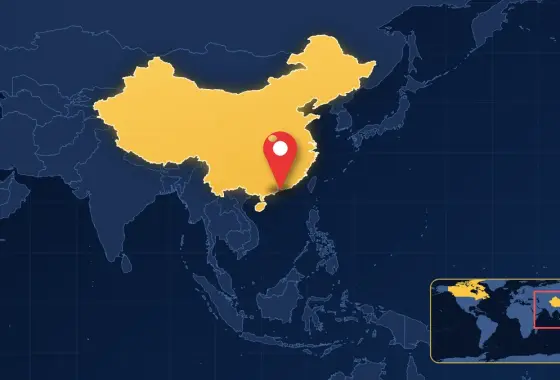
Chinese President Xi Jinping and Canadian Prime Minister Mark Carney met ahead of the Asia-Pacific Economic Cooperation (APEC) summit to be held in Shenzhen on 18–19 November and decided to extend trade arrangements between the two countries. According to The Standard, citing Reuters, and The Western Producer, Carney’s office said China would cut tariffs on more Canadian goods, including pork and seafood. China’s Commerce Ministry confirmed the general terms of the deal in a statement released the same day.
After the meeting Carney said relations with Beijing now had “greater predictability and stability”. The talks were Carney’s third face-to-face meeting with Xi since he became prime minister in 2025.
What does the deal cover?
According to the statement, the two leaders agreed to extend and expand a preliminary arrangement that improves Chinese market access for Canadian farmers and seafood harvesters. China will provide additional tariff relief on about C$400 million (about US$280 million) of Canadian exports, including frozen pork cuts and certain fish and seafood. The pork reduction covers frozen pork cuts worth about C$116 million.
In return, Canada will extend by two years the remission (exemption) measures it applies to certain Chinese steel and aluminium products, which were set to expire at the end of 2026. The Globe and Mail reported that in practice the relief will work through tariff refunds for importers.
How did the industry react?
Chris White, who heads the Beijing-based Canadian Meat Advocacy Office, said it was important that Carney had used “limited political capital” for the pork sector and described the package as a “pretty comprehensive part two of the framework”. White also said both sides “want to normalize the trading relationship”. But one of the biggest obstacles for the sector remains: offal, Canada’s most important pork export to China. Offal sells for far more in China than when it is rendered in Canada; White said it was not expected to be part of this week’s talks but that he hopes it will be addressed later.
Liam MacDonald of the Canadian Chamber of Commerce said the relief adds certainty, but noted that tariffs still limit access to the Chinese market for several agricultural products and urged continued efforts to lower them. Canada is reported to be sending a trade mission to China next year.
How did relations reach this point?
Relations between Canada and China were strained for a long time after Canada, at the request of the United States, arrested Huawei Vice Chair Meng Wanzhou in Vancouver in December 2018. The turning point came in January 2026: Carney became the first Canadian head of government to visit China since 2017, and after that visit China lowered tariffs on Canadian canola seed and peas. According to Heraldcorp, at the 29th China-Canada Joint Economic and Trade Commission held in Beijing on 4 November, exemptions on canola meal, peas, lobster and crab were also extended to the end of 2028.
Ottawa has also allowed annual imports of 49,000 Chinese-made cars at a 6.1% tariff; this quota will rise to 70,000 over five years. Chinese manufacturers such as BYD, Geely and Chery have moved to enter the Canadian market. China’s Finance Ministry said both sides welcome steps by their central banks to implement a bilateral local-currency swap agreement, and welcomed qualified Canadian institutions issuing yuan-denominated “Panda bonds” in China.
What did Xi say, and what are the criticisms?
According to Xinhua, Xi said that since the two countries agreed in January to advance their strategic partnership, cooperation in many fields has fully resumed, and he made four proposals: a more “accurate understanding” of each other’s development paths; deeper cooperation in trade, energy, agriculture and finance, expanding into green, digital and e-commerce; stronger cultural and people-to-people exchanges; and upholding the multilateral trading system.
Analysts and human rights groups, however, warn that closer ties could compromise Canada’s security and values. Critics point to the imprisonment of Hong Kong media tycoon Jimmy Lai, China’s secret execution of four Canadians last year and Canadian intelligence findings that Beijing interfered in at least two federal elections. China says it has no interest in interfering in Canada’s internal affairs.
What does this mean?
The deal is a concrete step in Ottawa’s strategy of diversifying export markets at a time when the United States has imposed hefty tariffs on many Canadian products. Carney says Canada is “well ahead of schedule” on its goal of increasing exports to China by 50% by the end of the decade. For farm and seafood producers this means a more predictable market; but items such as offal, together with security concerns, show that the relationship still rests on delicate balances. The presence of US, Chinese and Russian leaders at the APEC summit suggests global trade balances could be reshaped in the coming days; agri-food exporting countries such as Türkiye are also watching bilateral arrangements of this kind in the Chinese market from a competitive standpoint.
This report was compiled as of 18 November 2026, 09:00 Türkiye time; follow developments as they are updated.
This report is for information only and is not investment advice.
Frequently asked questions
Which Canadian products will China cut tariffs on?
Additional relief will cover about C$400 million of exports, including frozen pork cuts and certain fish and seafood.
What is Canada doing in return?
Canada is extending by two years its tariff exemptions on certain Chinese steel and aluminium products that were due to expire at the end of 2026.
When is the APEC summit?
The APEC leaders’ summit is being held in Shenzhen, China, on 18–19 November 2026.
Sources and further reading
- The Standard (Reuters), “Canada and China extend trade deals as Xi meets Carney ahead of APEC summit”, 18 November 2026.
- The Western Producer, “China to cut tariffs on Canadian pork, seafood after Carney, Xi meeting”, 17 November 2026.
- The Globe and Mail, “China rolls back tariffs on Canadian pork, seafood in new trade deal with Ottawa”, 17 November 2026.
- Heraldcorp, report on extension of Canada-China exemptions to end-2028, 5 November 2026.



Leave a comment
Your email address will not be published. Required fields are marked *