



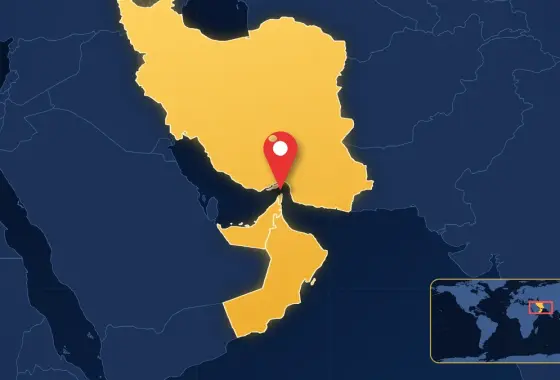
The International Energy Agency (IEA), in its annual World Energy Outlook 2026 published on Thursday, 19 November 2026, described the crisis caused by the conflict in the Middle East and the disruption of shipping through the Strait of Hormuz as “the largest energy supply shock on record.” According to the agency, by November the world had lost a cumulative 2.8 billion barrels of oil and 60 billion cubic metres of natural gas supply from the Gulf.
IEA Executive Director Fatih Birol said: “The Hormuz crisis has delivered a huge shock to the system. And I don’t see any credible pathway for the energy world to return to the way it was before.” Birol also stressed that the scenarios presented in the report are not forecasts but alternative paths showing different possibilities.
How much could oil flows through the Strait of Hormuz fall?
According to The National, with the fighting that began in late February, oil flows through the strait fell from about 20 million barrels a day to about 3 million barrels a day between March and May. In the IEA’s case where the crisis remains a prolonged risk, with new bypass pipelines, alternative sources of supply and importers reducing demand, the amount of oil passing through the strait could fall to 8.5 million barrels a day in 2030 and to under 2 million barrels a day by 2035.
However, the report notes that while importing countries can reduce their reliance on the strait over time, the same does not apply to the Middle East as a whole. In all scenarios, the Middle East remains the largest oil-exporting region to international markets.
Why are pipelines not enough?
One of the report’s striking findings is that even if Gulf producers built about $40 billion of new pipelines to bypass the strait, their oil exports would remain exposed to disruption. According to The National, about 7 million barrels a day of new pipeline capacity is planned or under consideration; however, of these, only the second Habshan–Fujairah line in the United Arab Emirates (1.8 million barrels a day) is under construction. The expansion of Saudi Arabia’s East-West pipeline and two Iraqi route projects have not yet started. The IEA warns that as long as instability persists in the region, alternative routes will also be vulnerable to attack.
The situation is even more difficult for liquefied natural gas (LNG): Qatar and the UAE have no feasible way to bypass the strait for their LNG exports. According to the report, Iranian attacks on Qatar’s Ras Laffan facilities knocked out more than 17 billion cubic metres of annual capacity, and bringing this capacity back will take about three years.
What is expected for producers and prices?
According to report data cited by The National, the UAE’s oil production is projected to rise from 4.4 million barrels a day in 2025 to 5.8 million barrels a day in 2035; the UAE left OPEC in May. Saudi Arabia’s output stays around 12 million barrels a day. In the current policies scenario, the Middle East’s net oil and gas income rises from $620 billion in 2025 to $860 billion in 2035. If importers accelerate diversification, the region’s oil exports could fall by about 20 per cent and its LNG exports by about 60 per cent.
The IEA says, however, that if the crisis is clearly resolved, the picture could reverse: supply could rebound strongly as delayed LNG volumes reach the market, creating a “buyers’ market” for oil and natural gas with significant downward pressure on prices. According to the agency, faster electrification could further change the outlook for both fuels.
How is the energy transition affected by this crisis?
According to the report, governments are moving to diversify their sources of supply, trade routes, fuel mixes and technology supply chains, to favour domestic resources and to accelerate electrification. Renewables, led by solar power, and nuclear energy stand to gain the most from this trend, and energy efficiency and biofuels could also gain ground. On the other hand, energy security concerns could prolong reliance on coal, particularly in Asia.
The IEA notes that since 2019, global electricity demand has grown faster than the economy and twice as fast as total energy demand. In all of the report’s exploratory scenarios, electricity’s share of final energy consumption approaches 30 per cent globally by 2035. As rising incomes, population growth and higher temperatures increase demand for mobility, heating, cooling and computing, the energy needed for cooling is overtaking the energy needed for heating for the first time in history. The report also warns that access to electricity and clean cooking, which accelerated in 2025, could slow because of high prices and shortages in 2026, especially in developing countries. Current or stated policies lead to global warming of 2.5–2.9 °C.
Birol said countries must take care “not to replace one dependency with another” as they pursue energy security, and stressed that “energy security and energy transitions have never been so closely aligned.”
What does this mean?
The report shows that the Hormuz crisis has moved beyond a temporary disruption and has begun to change countries’ energy strategies permanently. For countries such as Türkiye, which meet most of their energy needs through imports, diversifying sources and routes, increasing domestic and renewable capacity, and efficiency stand out as key agenda items for the coming decade. According to the IEA, the duration of the crisis will be the most important factor determining the scale of this change.
This report is for general information only and is not investment advice.
This report was compiled as of 19 November 2026, 20:30 Türkiye time; follow developments as they are updated.
Frequently asked questions
Why does the IEA call the Hormuz crisis the “largest supply shock”?
According to the report, by November a cumulative 2.8 billion barrels of oil and 60 billion cubic metres of natural gas supply from the Gulf had been lost; this is the largest energy supply disruption on record.
Can bypass pipelines end dependence on Hormuz?
According to the IEA, no. Even if about $40 billion of new pipelines were built, alternative routes would remain vulnerable to attack, and there is no feasible way to bypass the strait for LNG.
What could happen to oil prices if the crisis ends?
The IEA says a clear resolution could bring a buyers’ market for oil and gas as delayed supply returns, with significant downward pressure on prices; this is a scenario, not a forecast.
Sources and further reading
- International Energy Agency (IEA), “As an unprecedented shock reshapes the energy world, its duration will determine the scale of the change” (press release), 19 November 2026.
- The National, “IEA says $40bn spent on pipelines will not end Gulf’s Strait of Hormuz dependence”, 19 November 2026.
- A News, “Hormuz supply shock reshaping how countries meet their energy needs: IEA”, 19 November 2026.


Leave a comment
Your email address will not be published. Required fields are marked *