




If you look at a painting and see a face suddenly lit up out of the darkness, a garment in a sculpture rippling like fabric made of marble, or palace gardens that seem to stretch to infinity, you are most likely looking at a Baroque work. Baroque is a style that left its mark on painting, sculpture, architecture and music in Europe between about 1600 and 1750.
In our series on art movements we have already covered Cubism and Surrealism. In this article we go back from the modern movements to the Baroque, the art of light and emotion.
How was the Baroque born?
The Baroque style emerged in Rome at the beginning of the 17th century. After the Council of Trent, held in response to the Protestant Reformation, the Catholic Church wanted an art that would move believers, appeal to their emotions and present religious subjects in a way everyone could understand. Soon kings and aristocrats also embraced Baroque palaces and gardens to display their power.
The word “Baroque” is thought to come from the Portuguese barroco, used for an irregularly shaped pearl. The term was originally used to disparage this art, which was considered over-ornate compared with the balanced and calm style of the Renaissance.
The key features of Baroque art
- Contrast of light and shadow: Painters created a dramatic effect by using figures lit by a strong light in front of a dark background. This technique is called chiaroscuro, and its harshest form tenebrism.
- Movement: The static figures of the Renaissance gave way to bodies that turn, reach out and are caught in the moment.
- Emotional intensity: Pain, ecstasy, astonishment and faith were shown so as to affect the viewer directly.
- Grandeur and theatricality: Painting, sculpture and architecture often merged into a single stage.
Caravaggio: light born from darkness
One of the most influential names in Baroque painting, Caravaggio (1571 – 1610), painted holy figures with the faces of ordinary people chosen from the street. “The Calling of Saint Matthew” in the church of San Luigi dei Francesi in Rome, with its beam of light falling diagonally into a dark room, is one of the most famous examples of his style. Caravaggio’s influence soon spread across Europe; painters such as Artemisia Gentileschi developed this dramatic language with their own powerful expression.
Bernini: the sculptor who brought marble to life
Gian Lorenzo Bernini (1598 – 1680) is regarded as the greatest master of Baroque sculpture and architecture. In his sculpture “The Ecstasy of Saint Teresa” in Rome, marble seems to turn into soft fabric and cloud. Bernini also designed the bronze baldachin inside St Peter’s Basilica in the Vatican and the colonnades that embrace the square.
The Baroque in Northern Europe and Spain
The Baroque took on a different colour in each country. The Flemish painter Rubens was known for his energetic, richly coloured large compositions. In the Netherlands, in a Protestant society, portraits, landscapes and scenes of everyday life for wealthy merchants came to the fore instead of church commissions. Rembrandt’s “The Night Watch” of 1642 and Vermeer’s “Girl with a Pearl Earring” are among the most famous works of this period. In Spain, Velázquez’s “Las Meninas” of 1656, with a composition that invites the viewer into the picture, is one of the most debated paintings in art history.
Baroque architecture and traces of Ottoman Baroque
Baroque architecture is known for curving facades, grand staircases, domes and wide squares. The Palace of Versailles in France and its gardens are the symbol of a Baroque vision displaying the power of absolute monarchy. Baroque influence also reached Ottoman architecture in the 18th century; the Nuruosmaniye Mosque in Istanbul is regarded as the first large imperial mosque to bear the traces of Western Baroque.
How should you look at a Baroque work?
When you come across a Baroque work in a museum or a book, asking these four questions will help you understand it much better:
- Where is the light coming from? Look at which figure and which detail the painter lets the light fall on; the most important moment of the story is often there.
- Which moment am I seeing? Baroque artists choose not the beginning or end of an event but its most tense and dramatic moment.
- Where are the figures moving? Diagonal lines, outstretched arms and turning bodies lead your eye around the picture.
- What does the work want me to feel? Baroque works do not want to leave the viewer neutral; they aim to arouse fear, admiration or compassion.
These questions apply not only to paintings but also to sculptures and church interiors. As you walk around Bernini’s sculptures, you can discover a different movement and emotion from every angle.
Where can you see Baroque works?
The Rijksmuseum in Amsterdam, the Prado Museum in Madrid, the Borghese Gallery in Rome and the Vatican are among the most important places to see Baroque art in person. In the mid-18th century the Baroque gave way to the lighter and more decorative Rococo style, and then to Neoclassicism, which called for a return to ancient simplicity. Even so, the Baroque language combining light, movement and emotion has continued to inspire many artists in the following centuries, from painters to film directors.
Baroque music: the sounds of the same era
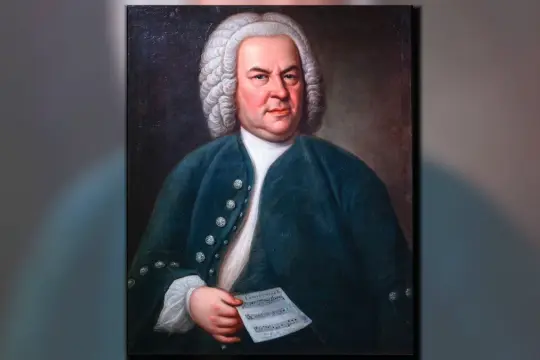
The Baroque is not limited to painting, sculpture and architecture; in music history, too, the period from roughly 1600 to 1750 is called the Baroque era. Claudio Monteverdi's L'Orfeo, staged in 1607, is considered one of the first great operas. Towards the end of the period, composers such as Antonio Vivaldi, George Frideric Handel and Johann Sebastian Bach, who died in 1750, came to the fore. Much like the contrast of light and shadow in Baroque painting, Baroque music is marked by strong contrasts, ornamentation and an unbroken bass line known as the basso continuo. Listening to Vivaldi's Four Seasons while looking at a Caravaggio painting is an enjoyable way to compare the feeling of the same age across different arts.
Frequently asked questions
What is the difference between the Baroque and the Renaissance?
The Renaissance emphasises balance, proportion and calm, while the Baroque seeks a more dramatic effect through movement, contrast of light and shadow and emotional intensity.
Is there Baroque music too?
Yes. Composers such as Bach, Vivaldi and Handel are the leading representatives of Baroque music.
What does chiaroscuro mean?
It means “light-dark” in Italian; it is the technique of creating volume and drama in painting through a strong contrast of light and shadow.
What are the most famous Baroque paintings?
Caravaggio’s “The Calling of Saint Matthew”, Rembrandt’s “The Night Watch”, Velázquez’s “Las Meninas” and Vermeer’s “Girl with a Pearl Earring” are among the best-known Baroque works.
Sources and further reading
- The Metropolitan Museum of Art, Heilbrunn Timeline of Art History, “Baroque Rome” (metmuseum.org)
- Encyclopaedia Britannica, “Baroque art and architecture” (britannica.com)
- Rijksmuseum, Rembrandt van Rijn, “The Night Watch”, 1642 (rijksmuseum.nl)
- Museo Nacional del Prado, Diego Velázquez, “Las Meninas”, 1656 (museodelprado.es)
- Encyclopaedia Britannica, "Baroque music" entry




Leave a comment
Your email address will not be published. Required fields are marked *