



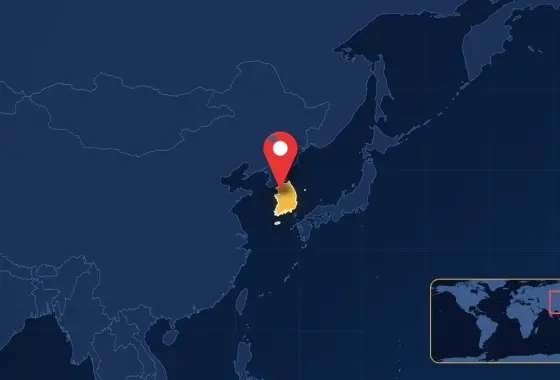
South Korea’s Education Minister Choi Kyo-jin offered to resign on Sunday, 22 November 2026, and President Lee Jae Myung accepted within an hour. The resignation came after it emerged that cheating had taken place on a national tax accountant exam using a miniature camera and a smartphone with the help of artificial intelligence, and amid public backlash over last-minute measures taken in preparation for the college entrance exam, the Suneung (the CSAT in The Korea Times). The minister said the exam had concluded without any major incidents but that he did not consider himself immune from criticism for failing to prepare adequately in advance.
This report is based on the accounts of France 24 (AFP) and The Korea Times of 22 November. The two differ in some details, especially the translation and timing of the minister’s remarks at a parliamentary hearing; these are noted in the relevant section.
How did the resignation unfold?
According to The Korea Times, Choi Kyo-jin offered his resignation on Sunday and President Lee Jae Myung accepted the offer within an hour; the paper reads this quick acceptance as an effective dismissal. France 24 writes that the presidential office confirmed the resignation had been accepted. Presidential spokesperson Kang Yu-jung said a new minister would be appointed under established procedures (Korea Times).
How the scandal began: the tax accountant exam
According to France 24, the scandal began on 15 November when the top scorer on the national tax accountant exam confessed to using a miniature camera and a smartphone to achieve a near-perfect score. The Korea Times gives the same date and says AI was used. The confession came four days before the nine-hour college entrance exam, the Suneung, so cheating methods were being debated nationally at the time. The sources do not name the person who confessed.
Measures taken before the exam
According to The Korea Times, two days before the exam the Education Ministry added 8,400 personnel, about 1,800 of them to detect smart devices and 6,600 as hallway proctors. Test takers were told to remove or cover clothing buttons with stickers. A day before the exam, items that had previously been allowed, such as correction tape and erasers, were banned. France 24 adds that public Wi-Fi was blocked at test sites. Prime Minister Han Seong-sook announced further measures, including emergency text alerts. The fact that these changes were announced so shortly before the exam drew public criticism.
The minister’s statements
According to France 24, Choi wrote on X that the exam had “concluded without any major incidents” but that he did not believe he was immune from criticism for failing to “prepare adequately in advance,” adding that he took “full responsibility” and offered his resignation. In a ministry statement quoted by The Korea Times, Choi said that “last-minute changes in preparations for the CSAT caused inconvenience to the public, particularly test takers.”
The “because of my age” remark in parliament
France 24 reports that when asked at a parliamentary hearing whether he was confident authorities could catch cheaters, Choi replied, “Due to my age, I am not confident I could.” The Korea Times renders the same remark as “Perhaps because of my age, I don’t think I could.” The difference between the two probably reflects different translations of the same statement. The sources also differ on timing: France 24 says the remarks came three days before the exam, while The Korea Times does not give the date of the hearing.
The exam tally
According to France 24, officials said 111 cases of misconduct involving electronic devices were detected during Thursday’s exam, nearly half of them caught through three emergency alerts sent to phones that test takers had not handed in. The figure suggests the measures worked to some extent, although the sources offer no judgement on whether it counts as sufficient.
Political reactions
According to The Korea Times, Shin Hyun-young, spokesperson for the governing Democratic Party, called for a successor to be named without delay. Jang Dong-hyeok, leader of the main opposition People Power Party, said the resignation “was not enough” and called for a full investigation. The reactions show the affair quickly became a subject of political dispute; the sources contain no official decision on the scope of any investigation.
Why does the Suneung matter so much?
The Suneung is a nine-hour national test held once a year that is decisive for university admission in South Korea; its weight for students and families is widely known. This is general background. What matters in this story is that measures meant to protect fairness were announced very close to exam day with changing rules, creating uncertainty for test takers.
Artificial intelligence and exam security
At the centre of the scandal is the combination of a miniature camera and a phone with artificial intelligence. It suggests that cheating in exams is no longer limited to slips of paper but includes tools that can decode images and produce answers in real time. The sources do not go into the technical details of the method, so this section is limited to the framework they provide.
Were the measures enough?
Both the 8,400 extra staff and the clothing and item restrictions on test takers are tough exam-security measures. But the criticism of “last-minute changes” is aimed more at timing and communication than at the measures themselves. The sources give no number of candidates or schools that suffered concrete harm; reactions are relayed in terms of general inconvenience.
What is expected of the new minister?
Who will replace the minister has not been announced. The presidential office said only that a new minister would be appointed under established procedures. The opposition’s call for a full investigation and the governing party’s call for a quick successor suggest that the new appointee will face heavy political pressure to review exam security and communication; this reading is based on the reactions in the sources and is not an official plan.
What to watch in the coming days
The main points to follow are: who becomes the new education minister, how the legal process around the tax accountant exam cheating unfolds, whether the investigation demanded by the opposition is opened, how Suneung results and appeals are handled, and what lasting rules are introduced against AI-assisted cheating in future exams. These are follow-up points consistent with the sources.
What does this mean?
In the short term the episode shows that an AI-assisted cheating scandal can lead as far as a minister’s departure. In the medium term the question that comes to the fore is how exam security will be planned against new technologies, with what communication and how far in advance. These readings rest on information relayed by the sources and are not firm forecasts.
This report was compiled as of 23 November 2026, 09:00 Türkiye time; figures and details may differ between sources and should be followed as developments are updated.
Frequently asked questions
Why did South Korea’s education minister resign?
Over the AI-aided cheating scandal on a tax accountant exam and the backlash to last-minute measures before the Suneung; he said he took “full responsibility.”
Did the president accept the resignation?
Yes. According to The Korea Times, Lee Jae Myung accepted the offer within an hour.
How did the scandal begin?
According to France 24, on 15 November the top scorer on a national exam confessed to using a miniature camera and a smartphone to score highly.
How many violations were detected at the Suneung?
France 24 says 111 cases involving electronic devices were detected on Thursday, nearly half through emergency alerts.
Sources and further reading
- France 24 (AFP), “South Korean education minister resigns over AI-driven exam cheating scandal”, 22 November 2026.
- The Korea Times, “Education minister resigns amid backlash over CSAT anti-cheating measures”, 22 November 2026.

Leave a comment
Your email address will not be published. Required fields are marked *