



What exactly was on the ballot?
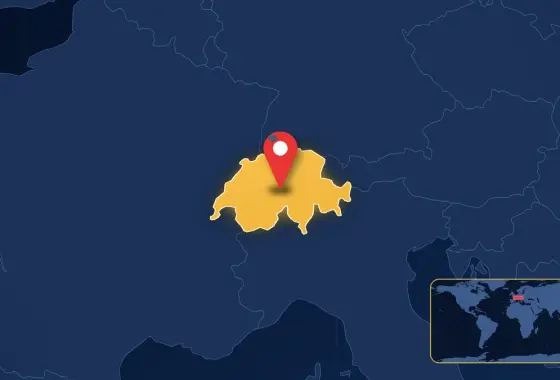
Swiss voters went to the polls on Sunday to decide whether to approve Parliament-adopted rules easing restrictions on the export and re-export of weapons. Initial projections from the gfs.bern polling institute showed 54% of voters in favour of loosening the regulation, a fairly narrow margin.
The referendum came about through signatures collected by left-wing parties and NGOs, which argued the new law would weaken Switzerland’s neutrality and humanitarian tradition and demanded the matter be put to a popular vote.
Why are the current rules being changed?
The wealthy, landlocked country has long avoided exporting arms to nations involved in armed conflicts and insisted on being consulted if client countries wanted to resell Swiss-made weapons elsewhere. After Russia’s invasion of Ukraine, the government began loosening these rules, and Parliament eased arms export regulations further last year.
Under the new rules, exports to 36 partner countries — mostly European, including Argentina, Australia, Canada, Japan and the US — would be approved automatically even if those countries are involved in a conflict. The government would still retain the right to block exports if national interests were at stake.
What case did supporters of the reform make?
Supporters from centrist and right-wing parties argued the reform was essential for the competitiveness of Switzerland’s defence industry within international supply chains. Yvan Pahud, a member of the hard-right Swiss People’s Party, said during the campaign it was about “retaining, within our territory, the expertise essential to our independence and security.”
Supporters also argued that the current strict rules put Swiss arms manufacturers at a disadvantage in defence cooperation with their European partners, and that easing the regulation would benefit both the industry and broader defence ties with Europe.
What do opponents say?
Left-wing parties and around 20 NGOs described the reform as "the dismantling of the main safeguards governing Swiss arms exports." Monika Maire-Hefti, president of Caritas Switzerland, said the reform "significantly increases the risk that Swiss weapons could indirectly end up in civil wars or in the hands of regimes that violate the law."
Critics also pointed out that the new rules do not cover Ukraine, despite repeated requests from European countries. Switzerland’s economy ministry said that since the country maintains a military equipment embargo on Russia, it cannot supply the same equipment to Ukraine either.
Where does Switzerland stand in the global arms trade?
The small, mountainous country held just a 0.3% share of the global arms market between 2021 and 2025. Even so, its arms exports surged by 43% to €1 billion in 2025, driven largely by ammunition and spare-parts shipments to Germany.
These figures show that despite its relatively small share, Swiss arms exports have grown rapidly in recent years and become an increasingly contentious issue in domestic politics.
Were other measures voted on the same day?
Swiss voters also decided on the same day whether to raise value-added tax to fund a rise in pensions; exit polls showed this proposal was rejected by 55%. Voters also approved, by 61%, a restriction on the sale of a certain category of fireworks.
Voting on three separate issues at once is common under Switzerland’s direct-democracy system, giving citizens regular opportunities to make direct decisions on matters ranging from security to public finances and public order.
How does this vote sit alongside Switzerland’s neutrality tradition?
Switzerland is known for its centuries-old policy of military neutrality, an identity seen as central to the country’s international standing. In a separate referendum in September, voters rejected, by nearly 70%, a proposal that would have further tightened neutrality rules and ended peacetime cooperation with NATO.
Taken together, the Swiss public has rejected tightening neutrality rules while now approving a loosening of arms export rules, charting a complex political course that tries to balance security and economic interests against its neutrality tradition.
What changes if the result is confirmed?
If the result is officially confirmed on Sunday evening, the new rules will take effect as reform supporters hoped, letting Swiss arms manufacturers benefit from faster approval processes for exports to the 36 partner countries, including those involved in conflicts.
Supporters argue this will both protect the domestic arms industry’s competitiveness and strengthen defence cooperation with European countries, while critics continue to warn the streamlined process could create new risks for oversight and transparency.
How might the debate continue after this referendum?
The narrow margin suggests the issue will remain divisive in Swiss society; NGOs and left-wing parties are expected to keep pushing for closer government oversight of export decisions.
At the same time, criticism of Ukraine’s exclusion from the new rules could keep European countries pressing Switzerland for more support, potentially reopening debate over the country’s neutrality stance in the period ahead.
How could this referendum result affect Europe’s broader defence-industry debate?
Switzerland’s decision to ease its rules comes at a time when defence industries across Europe are generally moving to strengthen supply chains and simplify export processes. Many European countries are raising defence spending while also wanting their own industries to move faster in international markets, and Switzerland’s step in this direction could fuel similar debates reigniting elsewhere on the continent.
At the same time, Switzerland’s continued exclusion of Ukraine from the new rules shows the gap in expectations with the EU and NATO member states has not closed. Analysts note this gap could remain a long-term source of uncertainty for European companies seeking to partner with Switzerland’s defence industry.
What does this mean?
The narrow result largely preserves the tension between Switzerland’s neutrality tradition and its defence industry’s competitiveness, while once again confirming the country’s tendency to loosen its arms export policy since Russia’s invasion of Ukraine. Ukraine’s continued exclusion from the new rules points to a persistent gap with European expectations, while the tight margin shows the issue will remain divisive within Swiss society. This assessment rests on exit polls and current reporting; details may change once official final results are confirmed.
This report was compiled as of 29 November 2026, 19:30 Türkiye time; figures and details may differ between sources and may be updated as events develop.
Frequently asked questions
What was voted on in the Swiss referendum?
Voters decided whether to approve Parliament-adopted rules easing restrictions on arms export and re-export; exit polls showed 54% in favour.
Which countries do the new rules cover?
Automatic approval would apply to exports to 36 partner countries, mostly European, including Argentina, Australia, Canada, Japan and the US, even if they are involved in a conflict.
Is Ukraine covered by these rules?
No; Switzerland’s economy ministry said that because of its embargo on military equipment to Russia, the same equipment cannot be supplied to Ukraine either.
Who called for the referendum?
Left-wing parties and around 20 NGOs collected signatures, arguing the reform would weaken Switzerland’s neutrality.
What share of global arms exports does Switzerland hold?
Just 0.3% between 2021 and 2025, though its exports rose 43% to €1 billion in 2025.
What else was voted on the same day?
A VAT increase proposal was rejected by 55%, while a restriction on a category of fireworks was approved by 61%.
Does this result change Switzerland’s neutrality policy?
Not directly; in September, voters rejected a separate proposal to tighten neutrality rules by nearly 70%, showing the country is charting a complex, balanced political course.
Sources and further reading
- Euronews, "Swiss voters set to ease arms export rules in tightly contested referendum, polling forecast says", 29 November 2026.
- SWI swissinfo.ch, "Swiss poised to decide on banning the funding of weapons makers" (referendum background and earlier votes).
- Al Jazeera, "Swiss voters reject tighter neutrality rules in referendum", 27 September 2026 (context on Switzerland’s recent neutrality vote).
Cite this article
Use this article as a source in your work, assignment or blog:
YulaHub Editorial Team. (29 November 2026). Switzerland Votes to Ease Arms Export Rules in Tightly Contested Referendum. YulaHub. https://yulahub.com/en/switzerland-votes-to-ease-arms-export-rules-in-tightly-contested-referendum
YulaHub Editorial Team. "Switzerland Votes to Ease Arms Export Rules in Tightly Contested Referendum." YulaHub, 29 November 2026, https://yulahub.com/en/switzerland-votes-to-ease-arms-export-rules-in-tightly-contested-referendum.
<a href="https://yulahub.com/en/switzerland-votes-to-ease-arms-export-rules-in-tightly-contested-referendum">Switzerland Votes to Ease Arms Export Rules in Tightly Contested Referendum</a> (YulaHub)





Leave a comment
Your email address will not be published. Required fields are marked *