


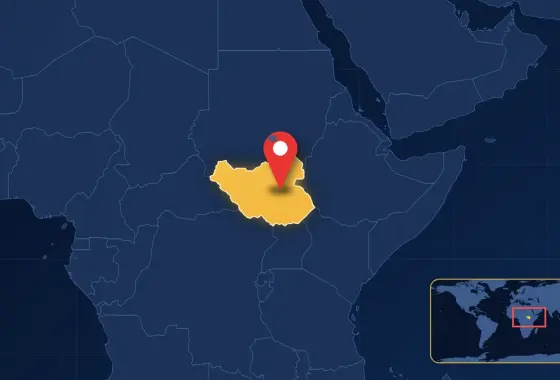
What exactly is happening in South Sudan right now?
The world’s youngest country, plagued by corruption and instability, has extended its voter registration period for a third week as it prepares for its first-ever national election. Registration began on 14 November and was due to end on Saturday, but the Electoral Commission announced it would extend the process by another week.
Registration tents in the capital, Juba, were still packed on Saturday, the date that had been expected to be the final day of sign-ups. The extension suggests registration was not moving fast enough, or that some regions faced shortages of materials.
Has this election already been postponed before?
Yes; South Sudan’s first-ever national elections were already postponed in 2022 and 2024. This year’s vote was also pushed back at the last minute, from December to 11 February 2027, and the Electoral Commission did not explain the reason for this latest delay.
The repeated postponements illustrate how logistically and politically fragile the process of holding the country’s first election since its 2011 independence has been; candidate nominations are planned for December, with campaigning running from late December to early February.
What challenges is the registration process facing?
According to the World Bank, about 90% of South Sudan’s population lacks official identification, making the registration process slow and complicated. Many people arrive at registration points accompanied by a local official who can vouch for their identity.
The Electoral Commission said about 1 million people had signed up for voting cards in recent weeks, a figure that represents only a small share of the estimated 12 million population, underscoring the pressure behind the decision to extend registration further.
How does opposition leader Riek Machar’s situation affect the election?
The country’s main opposition leader, Riek Machar, has been under house arrest since 26 March 2025, convicted of treason and crimes against humanity. His detention, along with that of his associates, raises serious questions about how inclusive the election process can be.
The UN Human Rights Commission has warned that an election held while Machar and his associates remain imprisoned could amount to a "constitutional coup" that dismantles the 2018 peace agreement and leaves President Salva Kiir with an unconditional advantage.
How is civil society viewing the election?
Some, like 42-year-old human rights activist Bak Malong, describe the election as a "waste of time" given that the opposition leader is imprisoned and clashes continue in Jonglei state, north of the capital. "I don’t trust these politicians... their intention is to cling to power without doing anything for the benefit and well-being of South Sudanese citizens," he said.
Others, such as 24-year-old student Helen Aketo Kumu Wilson, take a more hopeful view of the process; Wilson said "I’m so proud," encouraging other young people to get involved. These contrasting views show how deeply divided public opinion is on the election.
How does the country’s corruption record affect trust in the election?
South Sudan is ranked the most corrupt country in the world by Transparency International, a ranking that takes into account Kiir’s purge of opposition figures from government and his placement of family members in influential positions.
Numerous reports, including UN surveys, describe how government elites have siphoned off billions of dollars in oil revenue — the country’s main source of wealth — leaving almost no public services in place.
How significant is the security and weapons risk?
The country remains awash with weapons left over from a civil war that continued even after independence, a factor seen as raising the risk of violence during the election process. The 2013-2018 civil war between Machar and Kiir claimed an estimated 400,000 lives.
The UN has warned that holding an election amid ongoing ethnic and political tensions could trigger renewed conflict, a warning that reflects fears the fragile balance of the 2018 peace agreement could break down during the election process.
How is the international community following this process?
The UN and regional actors have voiced concern over the repeatedly shifting election timetable and the risk of the opposition’s exclusion, though these concerns have not so far led to concrete changes in the process.
International observers are closely watching whether the 2018 peace agreement will be preserved during the election and how Machar’s political rights will be handled, factors that will also shape how legitimate the election is seen to be by the international community.
What does the timeline look like from here?
Candidate nominations are expected to be completed in mid-December, with campaigning running from late December to early February. Voting is planned for 11 February 2027, with results expected to be announced by mid-February.
This tight schedule means both logistical preparation and confidence-building must be completed within a limited window, making it necessary to closely monitor every step of the process.
How much support are regional and international actors providing for the process?
The African Union and regional blocs say they are providing logistical and technical support for South Sudan’s election process, though this support is not expected to resolve the country’s chronic infrastructure gaps and identification problems in the short term. The UN’s peacekeeping mission in the region is also taking on a limited role in election security.
International donors plan to send observer missions to monitor the vote’s transparency, as in past transition processes, though how safely these missions can access areas still affected by conflict, such as Jonglei, remains uncertain. This uncertainty could directly affect how legitimate the election results are seen to be by the international community.
Neighbouring countries in the region are also preparing along their border areas for a possible wave of displacement from South Sudan, as conflicts since the country’s independence have already displaced hundreds of thousands of people regionally.
What does this mean?
The third extension of voter registration once again highlights the scale of the logistical challenges South Sudan faces as it prepares for its first national election. The imprisonment of the main opposition leader and the country’s ranking as the world’s most corrupt nation raise serious questions about how inclusive and credible the election will be. The divided views within civil society reflect this same uncertainty, with some seeing the process as a source of hope and others as a sham. This assessment rests on current reporting and official statements; the election timeline and conditions could change again in the coming weeks.
This report was compiled as of 29 November 2026, 19:30 Türkiye time; figures and details may differ between sources and may be updated as events develop.
Frequently asked questions
Why was voter registration extended in South Sudan?
The Electoral Commission extended the registration process, which began 14 November and was due to end Saturday, by another week so more people could register.
When will the election be held?
The vote, previously planned for December, was pushed back at the last minute to 11 February 2027, the third delay after postponements in 2022 and 2024.
How does Riek Machar’s situation affect the election?
Main opposition leader Machar has been under house arrest since 26 March 2025, convicted of treason and crimes against humanity; the UN has warned this could undermine the election’s legitimacy.
Why is registration facing difficulties?
The World Bank says about 90% of the population lacks official identification, the main factor slowing down registration.
What is South Sudan’s relationship with corruption?
The country is ranked the world’s most corrupt by Transparency International, with reports showing oil revenue has largely been siphoned off by government officials.
Does the election carry a risk of violence?
The UN warns that holding an election amid ongoing ethnic and political tensions, in a country awash with weapons, could trigger renewed conflict.
What is the international community doing to monitor the election?
International donors plan to send observer missions, though their access to conflict-affected areas like Jonglei remains uncertain, which could also affect how legitimate the election is perceived to be.
Could the election trigger new displacement in the region?
Neighbouring countries are preparing for a possible wave of displacement, since conflicts since South Sudan’s independence have already forced hundreds of thousands of people from their homes regionally.
Sources and further reading
- Euronews, "South Sudan registers voters for its first-ever election", 29 November 2026.
- Al Jazeera, "South Sudan postpones first-ever national elections until February", 14 November 2026.
- Africanews, "South Sudanese start registering to vote ahead of first national elections", 14 November 2026.
Cite this article
Use this article as a source in your work, assignment or blog:
YulaHub Editorial Team. (29 November 2026). South Sudan Extends Voter Registration for a Third Week Ahead of First-Ever Election. YulaHub. https://yulahub.com/en/south-sudan-extends-voter-registration-for-a-third-week-ahead-of-first-ever-election
YulaHub Editorial Team. "South Sudan Extends Voter Registration for a Third Week Ahead of First-Ever Election." YulaHub, 29 November 2026, https://yulahub.com/en/south-sudan-extends-voter-registration-for-a-third-week-ahead-of-first-ever-election.
<a href="https://yulahub.com/en/south-sudan-extends-voter-registration-for-a-third-week-ahead-of-first-ever-election">South Sudan Extends Voter Registration for a Third Week Ahead of First-Ever Election</a> (YulaHub)





Leave a comment
Your email address will not be published. Required fields are marked *