



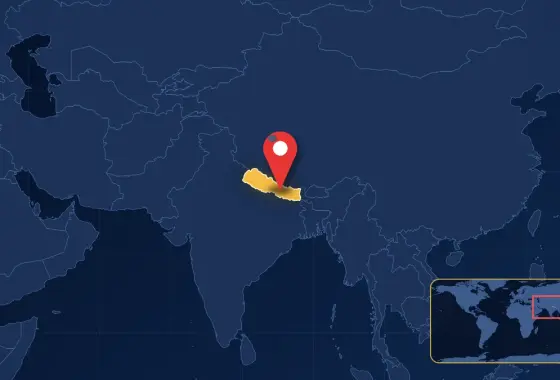
What happened during the visit?
Nepal’s Prime Minister Balendra Shah visited New Delhi on 22–23 November 2026. According to Nepali press the visit lasted about 28 hours and was Shah’s first official trip to India. After talks with Indian Prime Minister Narendra Modi, the two countries signed eight memoranda of understanding (MoUs) and issued a shared vision document. The most prominent items were an economic assistance package and the flagging-off from Delhi of a train link between Ayodhya and Nepal’s Janakpur.
Indian sources such as Outlook India, ANI and Deccan Herald framed the visit as a recalibration of ties, while the Kathmandu Post drew a more cautious picture: by its account, longstanding contentious issues were deliberately set aside and the visit concentrated on development projects and economic aid. The two framings are not mutually exclusive; the reports present the same facts with different emphasis.
What do the eight MoUs cover?
According to ANI, the eight MoUs cover space technology, security training, capacity building for civil servants, health, traditional medicine, sustainable urban development and agriculture. They include plans for a satellite communication network using the South Asia Satellite and cooperation in forensic science and police training. The full texts are not in the sources, so concrete commitments, timelines and budgets remain unclear for now.
Because an MoU is a statement of intent rather than a binding treaty, how far these documents are put into practice depends on concrete steps in the coming months. Deccan Herald reported that, alongside the signing, the Ayodhya–Janakpur train was flagged off from Delhi, presented as a symbolic step underlining the two countries’ religious and cultural ties.
The package of about 1.6 billion dollars
The Wire wrote that India announced roughly 1.6 billion dollars in assistance, the largest financial commitment it has made to Nepal. Organiser gives the package as Rs 15,000 crore, and Dainik Jagran says it equals 240 billion Nepalese rupees, or about 1.62 billion dollars. The figures are close, but there is rounding and exchange-rate difference between sources; the exact number should be checked against the official joint statement.
Before the visit, Nepali press had reported that Kathmandu was preparing to seek more than 2 billion dollars from India, part as grants and part as a line of credit through the Export-Import Bank of India. How far the announced package meets that request cannot be settled from the sources, and the split between grants and credit is not given in detail.
Floods and the reconstruction agenda
Behind the visit lies the flood and landslide disaster that struck Nepal in August 2026 and caused heavy loss of life and property. Press assessments put the damage from the August floods at about 1.66 billion dollars, while Nepal’s needs assessment puts the total cost of recovery far higher, at 4.77 billion dollars. Another assessment calculates damage and losses at 2.69 billion dollars. These are estimates with different dates and methods and cannot be compared directly with one another.
After the floods India sent humanitarian relief to Nepal, and Modi spoke by phone with Shah, saying India was ready to provide all possible help. The package announced in this visit can therefore be read as part of the reconstruction and infrastructure phase following the first emergency aid; which part of it is earmarked for flood-hit areas is not clear from the sources.
What else was decided?
According to the sources, India agreed to set up an offshore campus of an Indian Institute of Technology in Nepal. The sides also agreed to allow two-way traffic on the Bhairahawa–Lucknow air route, although Nepal’s other long-standing demands for air access remain unresolved. Shah invited Modi to visit Nepal and Modi accepted, with the date to be set through diplomatic channels.
These steps show progress in concrete and relatively easy-to-implement areas of the bilateral relationship. Moves on education, transport and infrastructure reinforce the visit’s development-focused character. Most of the detail, however, has not yet been shared with the public.
What was not on the table: the border and the 1950 treaty
According to Nepal’s foreign minister, the two leaders instructed their foreign secretaries to continue talks on the remaining border issues, but neither a timetable nor a concrete agreement was announced. The Kathmandu Post says the boundary dispute, the revision of the 1950 Treaty of Peace and Friendship, the Eminent Persons Group (EPG) report and the stalled Pancheshwar Multipurpose Project were largely untouched.
The disputed areas along the border have long been among the most sensitive items in relations between the two countries. Setting them aside may have kept the visit’s tone smooth, but the sources do not discuss in detail whether that was a choice or a necessity. A reading of the visit as one that “made progress while postponing problems” is therefore more consistent with the sources than one that says it “resolved problems”.
The regional frame
Nepal sits between India and China and tries to balance its foreign policy between the two large neighbours. Damage on the China–Nepal border after the floods was also covered in the press. The package India announced makes Delhi’s economic weight in Kathmandu visible; although the sources do not comment on it directly, it is a notable element for regional balances.
India had earlier extended four separate lines of credit to Nepal, together worth about 1.65 billion dollars according to the Indian Embassy in Kathmandu. The sources do not say how these earlier commitments relate to the new package, so adding the two figures together could be misleading.
What does this mean?
In the short term the visit shows Nepal’s post-flood reconstruction needs meeting India’s wish to deepen its regional influence. The concrete gains lie in transport, education and economic support, while deeper issues such as the border and the 1950 treaty appear postponed. The package’s real effect will depend on how far the MoUs are implemented and on the balance between credit and grants. These readings rest on information relayed by the sources and are not firm forecasts.
This report was compiled as of 24 November 2026, 09:00 Türkiye time; figures and details may differ between sources and should be followed as developments are updated.
Frequently asked questions
Which areas do the MoUs cover?
According to ANI: space technology, security training, civil-servant capacity building, health, traditional medicine, sustainable urban development and agriculture.
How big is the assistance package?
The Wire says about 1.6 billion dollars, Organiser Rs 15,000 crore and Dainik Jagran 240 billion Nepalese rupees (about 1.62 billion dollars); check the official statement.
Was the border dispute resolved?
No. The leaders told their foreign secretaries to continue talks; no timetable or concrete agreement was announced.
Will Modi visit Nepal?
Shah invited Modi and Modi accepted; the date will be set through diplomatic channels.
Sources and further reading
- Outlook India, “From Ayodhya-Janakpur Train To Eight MoUs: Key Outcomes Of Nepal PM Balendra Shah’s India Visit”, 23 November 2026.
- The Wire, “On Balen Shah’s First India Visit, Modi Rolls Out the Welcome Mat With $1.6 Billion in Aid for Nepal”, 23 November 2026.
- The Kathmandu Post, “Longstanding disputes set aside, progress on development projects and economic aid”, 24 November 2026.
- ANI, “India, Nepal sign eight MoUs across space, security, health, and governance during PM Balen Shah’s visit”, 23 November 2026.
- Deccan Herald, “India-Nepal ties: MoUs signed, Janakpur train flagged off in Delhi”, 23 November 2026.
Leave a comment
Your email address will not be published. Required fields are marked *