




What happened?
On Wednesday, 25 November 2026, the United States proposed new tariffs on imports from 14 trading partners. According to Deutsche Welle, the Office of the US Trade Representative (USTR) unveiled the proposal after an investigation lasting about eight months. The probe covered 16 economies and looked at what Washington calls structural “excess capacity”, the claim that surplus production abroad is undercutting American manufacturers.
The proposed rates go up to 20%, with the highest rate for China. The list includes the European Union, China, Japan, South Korea, Taiwan, India, Vietnam, Thailand, Indonesia, Malaysia, Singapore, Bangladesh, Cambodia and Switzerland. Mexico and Norway, the other two economies under investigation, are left off for now. Türkiye is not among the 14 economies announced.
These are not final duties. A public comment period and a hearing come first, and the tariffs could only take effect afterwards. Reports say that could be January at the earliest.
What are the rates?
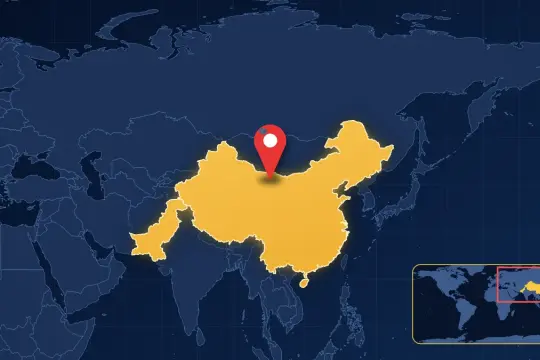
A 20% excess-capacity tariff is proposed on Chinese goods. Because it would be added to duties of around 25% imposed in Donald Trump’s first term, DW says the combined rate on some Chinese goods could reach 45%. HNGN reported that Vietnam, which has absorbed a large share of manufacturing investment moving out of China, was also proposed at 20%.
Allies that already have trade deals with Washington are treated differently. A senior official said the new duties would stay within agreed ceilings: 15% for the European Union, Japan, South Korea and Taiwan, and 19% for Malaysia. Details for the other partners were to be set out in a Federal Register notice.
The duties will not be stacked on everything else. They would not be combined with the 10% and 12.5% tariffs imposed in July on 60 economies over alleged weak enforcement against forced labour; where both apply, the higher rate prevails. Nor would they be added to existing sector tariffs on cars, steel or aluminium. About US$30 billion of Chinese imports being considered for tariff cuts would also be exempt.
Washington’s reasoning
The US accuses the targeted economies of creating or contributing to structural excess capacity in manufacturing. Officials define it as promoting production and capacity detached from demand and market principles, citing industrial policy, state subsidies and the use of components from non-market economies. Trade Representative Jamieson Greer, who opened the probe in March, has argued that state support lets foreign producers flood world markets with cheap goods.
HNGN reported that Washington accuses China of flooding markets with steel, aluminium, electric vehicles, solar products, appliances and other goods, often priced below Western competitors, and that China’s trade surplus reached a record of nearly US$1.2 trillion last year. Part of the probe also targets Chinese investment in factories in Southeast Asia.
Greer told CNBC that the proposed tariffs largely stick to rates set under existing trade agreements, though some could be “topped up” by a few percentage points.
Reactions
The European Union said it would examine the proposal but rejected Washington’s allegations of excess industrial production. In its statement it strongly rejected the premise that Europe is a source of structural overcapacity and said it expected the US to honour the trade agreement reached with Brussels last year.
Beijing also dismissed the allegations and repeated its opposition to trade wars, but stopped short of threatening retaliation. Foreign Ministry spokesperson Guo Jiakun called overcapacity a false issue and said China opposed using it as an excuse for political manipulation. A senior US official said Washington did not expect China to retaliate, describing both sides as seeking stability.
DW also reported a separate announcement concerning Brazil, proposing higher tariffs on raw and refined sugar and a new 10% duty on aircraft, which would affect the Brazilian manufacturer Embraer.
Background: the court ruling and a new legal footing
According to HNGN, the US Supreme Court in February struck down Trump’s sweeping global tariffs imposed under the International Emergency Economic Powers Act. The administration then applied a temporary 10% global tariff under Section 122 of the Trade Act and replaced it in July with the forced-labour duties. The new proposal is seen as another strand under Section 301 of the same law.
Section 301 requires country-by-country investigations, documentation of unfair practices and public input. That makes it slower than an emergency order but, in the view of analysts, legally firmer. It was also the basis for the tariffs on Chinese goods imposed during Trump’s first term.
There is also a timing detail: the trade truce between the US and China reached in Busan, South Korea, in October 2025 expires on 10 January, which coincides with the possible start date of the new tariffs. The official also indicated that more trade deals could be struck around the G20 summit in Miami in December.
What does it mean for consumers and firms?
Import duties are paid by the companies bringing goods in, and part of the cost can be passed on to prices. DW noted that the measures could add pressure on American consumers already coping with a high cost of living. The scale of the effect will depend on the final rates, the products covered and the exemptions.
For exporters in agreement partners such as the EU, Japan, South Korea and Taiwan, the immediate impact may be limited because the ceilings are preserved. For countries without final deals, such as India and Vietnam, the proposal may act as pressure to speed up negotiations. These are assessments by officials and the press; the outcome is not yet known.
What happens next?
The expected stages are publication of details in the Federal Register, a comment period, a hearing and a final decision. The listed countries can submit views and continue bilateral talks during this time. The review of Mexico and Norway is ongoing and USTR gave no timetable for it.
The figures in this report are proposed rates and may change in the final decision. Companies should consult official US documents for the product codes that concern them.
What does this mean?
The proposal shows Washington seeking to rebuild a tariff wall weakened by the court ruling, this time through country-by-country investigations. For world trade, what will matter most is the objections filed during the comment period, concessions made at the negotiating table and the fate of the truce with China in January. For importers, uncertainty will continue for a while. This assessment rests on the sources and is not a firm forecast.
This report was compiled as of 25 November 2026, 19:00 Türkiye time; figures and details may differ between sources and should be followed as developments are updated.
This article is for general information only and is not investment advice. Review the official data before making any investment decision and consult a licensed adviser if needed.
Frequently asked questions
Do the tariffs take effect immediately?
No. They are proposals and can only take effect after public comment and a hearing, possibly January at the earliest.
Which economies are on the list?
The EU, China, Japan, South Korea, Taiwan, India, Vietnam, Thailand, Indonesia, Malaysia, Singapore, Bangladesh, Cambodia and Switzerland.
Is Türkiye on the list?
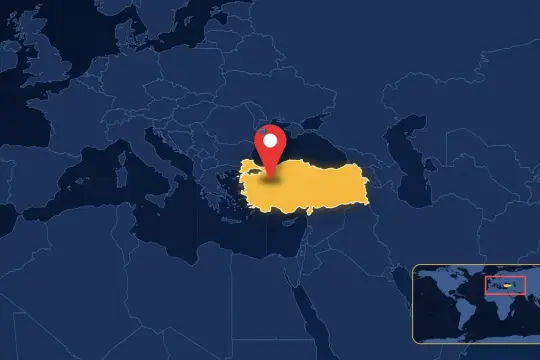
Türkiye is not among the 14 economies announced.
How high could the total rate on China go?
Combined with existing duties of about 25%, reports say some goods could face up to 45%.
Sources and further reading
- Deutsche Welle (AFP, AP, DPA, Reuters), “US plans new tariffs on EU, China and 12 other economies”, 25 November 2026.
- HNGN, “US proposes excess-capacity tariffs on 14 trading partners”, 25 November 2026.
- Reuters, “Trump announces new tariffs, undeterred by midterms defeat”, 25 November 2026.
- Politico, “US threatens double-digit tariffs on EU, China, 12 others after investigation”, 25 November 2026.
- Anadolu Agency, “US prepares new tariffs of up to 20% on China, other trading partners: reports”, 25 November 2026.




Leave a comment
Your email address will not be published. Required fields are marked *