



The Franks were Germanic tribes living along the Rhine from the 3rd century. After the Western Roman Empire fell in 476, a power vacuum opened in Gaul (today’s France). Clovis I of the Merovingian dynasty, who came to the throne in 481, defeated rival groups, united the Franks in a single kingdom and accepted Catholic Christianity. This choice bound him to the Roman population of Gaul and to the Church.
Mayors of the palace and Tours
Over time the Merovingian kings lost power and government passed to the “mayors of the palace”. One of them, Charles Martel, halted an Umayyad army from al-Andalus near Tours (Poitiers) in 732. His son Pepin the Short became king in 751, founding the Carolingian dynasty, and allied with Rome by granting the papacy lands in Italy.
Charlemagne
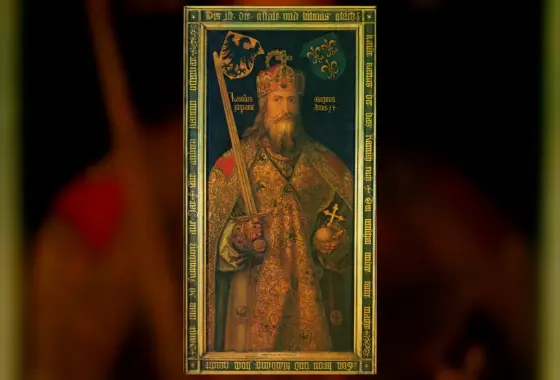
Pepin’s son Charlemagne (Charles the Great) conquered Saxony, Lombardy and Bavaria, uniting much of Western Europe under one rule. On 25 December 800 he was crowned emperor in Rome by Pope Leo III. His capital Aachen became the centre of the cultural revival known as the “Carolingian Renaissance”, when schools were opened and ancient texts copied.
Verdun and legacy
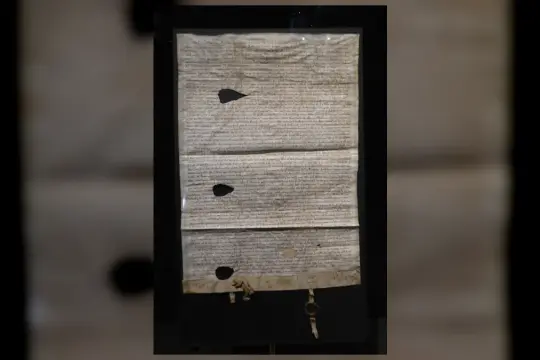
After the death of Charlemagne’s son Louis the Pious, civil war among his grandsons ended with the Treaty of Verdun in 843. The empire was divided into West, Middle and East Francia. West Francia became the basis of France, and East Francia of Germany and the Holy Roman Empire.
Sources and further reading
- Einhard, Vita Karoli Magni (Life of Charlemagne).
- Rosamond McKitterick, Charlemagne: The Formation of a European Identity, Cambridge University Press.
- Encyclopaedia Britannica, “Frank” and “Charlemagne”.
People also ask
What was the Frankish Kingdom? The Frankish Kingdom was the Germanic state founded in Gaul after the fall of the Western Roman Empire, which laid the foundations of medieval Western Europe.
Leave a comment
Your email address will not be published. Required fields are marked *