



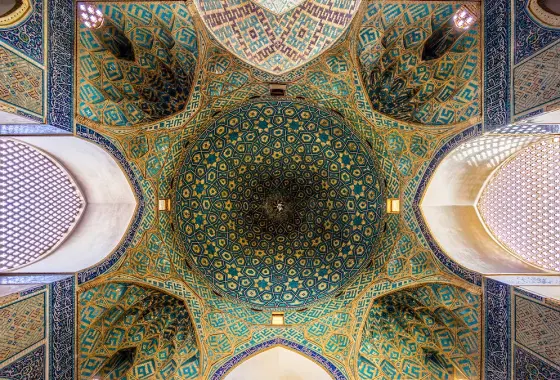
Seeing a mosque in a dream is interpreted very positively, especially in the Islamic tradition. For anyone asking “what does entering a mosque in a dream mean?” or “what does praying in a mosque in a dream signify?”, in short: in most readings the mosque is a symbol of peace, security and a turn towards the spiritual.
General meaning
In traditional dream interpretation, the mosque, as a place where people gather, find peace and worship, is read as a good sign. Entering a mosque points to finding refuge from troubles and peace of heart; praying in a mosque is taken as a sign that wishes will be granted and affairs will fall into order. Seeing a ruined or empty mosque is read in some interpretations as a reminder of neglected spiritual needs.
Interpretations by situation
- Entering a mosque: Finding refuge, peace and security.
- Praying in a mosque: Wishes being granted, affairs falling into place.
- Hearing the call to prayer: An invitation, good news or an important reminder.
- Seeing a minaret: Rising, respect and a guiding figure.
- Building or repairing a mosque: Good deeds and lasting kindness.
- An empty or ruined mosque: A reminder of neglected spiritual needs.
In different cultures
In almost every culture, places of worship appear in dreams as symbols of peace and belonging. In the Islamic tradition, mosques have historically been centres not only of worship but also of education, charity and community life, and dream readings carry this meaning.
From a psychological perspective
Psychologically, seeing a place of worship may reflect a search for inner balance, meaning and belonging. In busy, tiring periods it is natural for the mind to conjure up a peaceful, safe place.
Parts of a mosque and their meaning in dreams
Which part of the mosque appears in a dream can also affect its interpretation, so it helps to know the parts. The mihrab is the niche that shows the direction of the qibla and where the imam leads the prayer. The minbar is the stepped pulpit from which Friday and festival sermons are delivered, while the kürsü is the raised seat used for lessons and talks. The şadırvan is the fountain built for ritual ablution, and the son cemaat yeri is the porticoed area at the mosque's entrance. In folk interpretations the mihrab is linked to devotion, the minbar to words and counsel, and the şadırvan to purification.
Dreams and their interpretation in the Islamic tradition
Dreams are an important subject in Islamic sources. A hadith recorded in Sahih Muslim states that dreams are of three kinds: good news from God, a reflection of a person's own thoughts, and a frightening suggestion from Satan. The name most often cited in the tradition of dream interpretation is Ibn Sirin, a scholar of the generation after the Companions who died in Basra in 728; however, it is debated whether the dream books known under his name were actually written by him. Scholars also stress that a dream alone is not a source of religious rulings.
The difference between a masjid and a mosque
In dream interpretations a small masjid and a large mosque are sometimes linked to different meanings, so it helps to know the difference between the two buildings. According to the TDV Encyclopedia of Islam, "masjid" means a place of prostration and can be used for any place where prayer is performed; "cami" is the name given to a large masjid that gathers the congregation and where the Friday prayer is held. This is why mosques have a minbar for the sermon, while small masjids often do not. The first masjid built in Islamic history was the Quba Mosque, and the first large gathering place in Medina was the Prophet's Mosque, built in 622. In folk interpretation being in a crowded mosque is read as joining a community, and a quiet masjid as inner peace.
Frequently asked questions
Is seeing a mosque in a dream a good sign?
In the vast majority of traditional readings, yes; it is associated with peace, security and spiritual blessing.
What does praying in a mosque in a dream mean?
Most readings see it as a sign of wishes being granted, peace of heart and things improving.
Dream interpretations are based on folk tradition and cultural readings; they are for entertainment and curiosity only and are not scientific predictions.
Sources and further reading
- TDV Encyclopedia of Islam – "Rüya", "İbn Sîrîn", "Mihrap" and "Minber" entries
- Muslim, Sahih, "Book of Dreams"
- TDV Encyclopedia of Islam – "Cami" and "Mescid-i Nebevî" entries






Leave a comment
Your email address will not be published. Required fields are marked *